
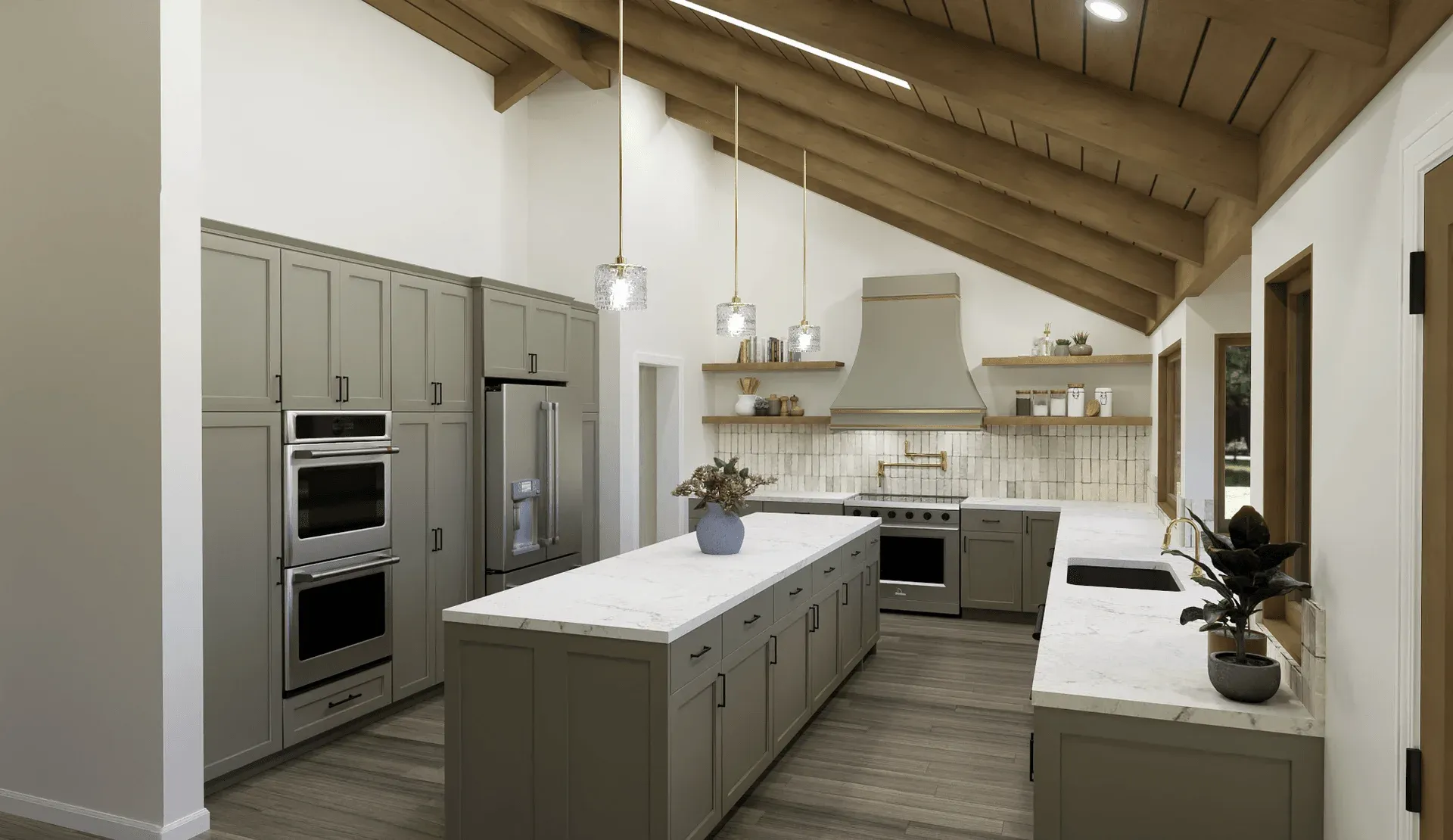
You’ve found the perfect lot in Eagle, Meridian, or somewhere in the Treasure Valley. You’ve interviewed builders, reviewed portfolios, and started dreaming about that open-concept kitchen with mountain views. Then you receive two proposals and they look completely different.
One builder quotes you a firm price. Another talks about “cost plus a fee” and “open book accounting.” Suddenly, the excitement of building your dream home gets overshadowed by a gnawing question: Which contract actually protects me?
This confusion isn’t just frustrating, it’s expensive. The wrong contract choice can mean unexpected costs, a strained relationship with your builder, or worse, a project that ends up in a legal dispute. Change orders and scope disputes remain among the top causes of construction conflicts, and contract misunderstandings can escalate quickly.
Here’s what experienced Idaho homeowners and the best custom builders understand: neither contract type is inherently “better.” The right choice depends on your project, your risk tolerance, and how much involvement you want in the building process.
Understanding Fixed-Price Contracts: Certainty Comes at a Cost
A fixed-price contract (sometimes called a “lump sum” contract) establishes the total cost of your custom home before construction begins. Your builder analyzes plans, specifications, and material selections, then commits to completing the project for a predetermined amount.
How Fixed-Price Works
With this contract type, your builder takes responsibility for completing the project within the agreed budget. If lumber prices spike or a subcontractor charges more than expected, the builder absorbs those costs. Your price remains locked in from day one.
The builder’s profit, overhead, and a contingency for unexpected issues are all built into that single number. You won’t see itemized invoices for every board and nail instead, you’ll make payments based on construction milestones like foundation completion, framing, and final walkthrough.
The Real Advantages of Fixed-Price
Knowing the number up front is the primary benefit. Construction costs made up 64.4% of the average new home price in 2024, a record high for the series (NAHB Cost of Construction Survey, 2024). With construction carrying that much of the price, knowing your investment before you build matters for financial planning.
Fixed-price contracts also simplify the building process. You won’t spend weekends reviewing invoices or questioning material costs. The administrative burden shifts to your builder, freeing you to focus on design decisions and enjoying the process.
Perhaps most importantly, your builder has strong financial incentive to manage costs efficiently. Every dollar saved below their estimate goes to their bottom line, which typically motivates builders to negotiate better prices with suppliers and find cost-effective solutions when challenges arise.
The Trade-Offs You Should Know
That certainty comes with trade-offs. Fixed-price contracts tend to appear higher than cost-plus estimates because experienced builders factor in contingencies for the unknown. They’re pricing risk into the number.
Design flexibility decreases once you sign. Changes to the original scope require formal change orders, which add time and cost. This is why thorough pre-construction planning becomes essential; you need to finalize design decisions before breaking ground.
The pre-construction phase also takes longer. Your builder needs completed design plans, detailed specifications, and finalized material selections to calculate an accurate price. If you’re eager to start digging, this deliberate process can feel frustrating.
Understanding Cost-Plus Contracts: Transparency and Flexibility
A cost-plus contract (also called “open book” or “time and materials”) works differently. You pay for actual construction costs materials, labor, subcontractors, permits plus a markup or fee that covers your builder’s overhead and profit.
How Cost-Plus Works
Your builder documents every expense throughout construction. You receive detailed invoices showing exactly where your money goes, line by line: electrical rough-in, the roofing subcontractor, kitchen cabinets. The “plus” portion, either a percentage or a flat fee, compensates your builder for managing your project.
This transparency appeals to many homeowners. You can see the actual cost of every element, from foundation concrete to door hardware. Nothing hides behind a lump sum.
The Real Advantages of Cost-Plus
Flexibility represents the biggest benefit. When you decide mid-project that you want a different tile in the master bath or an additional window in the great room, your builder implements the change without renegotiating the entire contract. You simply pay the actual cost plus the agreed markup.
This contract type also allows construction to begin before every detail is finalized. If you’re still selecting light fixtures or debating countertop materials, you don’t have to pause the project. The design can evolve as construction progresses.
Cost-plus contracts can also benefit homeowners if a project comes in under the initial estimate. You pay actual costs, not the builder’s worst-case projections. In a stable material market, this could mean spending less than you anticipated.
For complex custom homes with unique architectural features, challenging site conditions, or highly personalized finishes, cost-plus often makes practical sense. When the scope is difficult to define precisely at the outset, trying to force a fixed price can create problems for everyone.
The Trade-Offs You Should Know
Budget uncertainty is the primary concern. Your final cost depends on actual expenses, which you can’t fully predict at the start. Material prices fluctuate, unexpected site conditions emerge, and design decisions add up.
Cost-plus contracts also require more involvement from you. Reviewing detailed invoices, monitoring expenses, and staying engaged with the financial side of your build demands time and attention. Some homeowners find this exhausting rather than empowering.
There’s also a structural reality to consider: your builder has less financial incentive to negotiate hard on material costs or find the most efficient solutions, because the markup applies to whatever is spent on your framing. Reputable builders hold high standards under either contract type, but the financial incentives differ.
Fixed-Price vs. Cost-Plus: Quick Comparison
| Factor | Fixed-Price | Cost-Plus |
| Budget Certainty | High price locked upfront | Variable final cost unknown |
| Transparency | Limited visibility into costs | Full visibility via open books |
| Design Flexibility | Lower changes require formal orders | Higher adjustments easier |
| Risk Position | Builder assumes more risk | Homeowner assumes more risk |
| Pre-Construction Time | Longer requires finalized plans | Shorter can begin sooner |
| Administrative Burden | Lower for homeowner | Higher for homeowner |
| Best For | Well-defined projects | Evolving or complex projects |
What Idaho’s Construction Market Means for Your Contract Choice
Building in Idaho adds specific considerations to this decision. The state leads the nation in new home construction activity, authorizing 21.2 new units per 1,000 existing homes in 2024 more than twice the national average. This growth creates both opportunities and challenges.
Custom home cost in Idaho depends on location, finishes and complexity, and every project is priced to its scope. In the Boise metro area specifically, strong demand and competition for skilled labor push costs upward.
Idaho’s construction industry has grown a great deal, but that growth hasn’t eliminated labor pressures. When skilled trades are in high demand, material costs fluctuate and supply chains stay unpredictable, the stakes of your contract choice go up.
For a straightforward custom home with well-defined plans in a stable market, fixed-price often serves Idaho homeowners well. For highly customized builds, challenging lots, or projects where you anticipate making decisions throughout construction, cost-plus may better match your needs.
Common Mistakes Idaho Homeowners Make with Construction Contracts
Choosing Based on Initial Numbers Alone
A cost-plus estimate often appears lower than a fixed-price bid because it doesn’t include contingencies for risk. Comparing these numbers directly is like comparing apples to oranges. The cost-plus estimate can easily exceed the fixed-price bid once construction begins.
Skipping the Pre-Construction Phase
Rushing into construction without finalized plans creates problems regardless of contract type. With fixed-price, incomplete designs lead to excessive change orders. With cost-plus, unclear scope makes it impossible to establish realistic budget expectations.
Ignoring the Builder’s Track Record with Each Contract Type
Some builders excel at fixed-price work; they’ve built similar homes repeatedly and can price accurately. Others prefer cost-plus because their projects are highly customized. Ask your builder which contract type they use most often and why. Their comfort level matters for your project’s success.
Failing to Define Change Order Processes
Every contract needs clear procedures for handling changes. How will changes be documented? Who approves them? How quickly must approval happen? Vague change order processes cause disputes regardless of whether you chose fixed-price or cost-plus.
Not Understanding What “Cost” Includes
In cost-plus contracts, the definition of “cost” determines your final price. Does it include the builder’s supervision time? Equipment rental? Transportation? Trash removal? Get specifics in writing before you sign.
Taking Action: How to Choose the Right Contract for Your Idaho Custom Home
Step 1: Assess Your Project’s Definition
How finalized are your plans? If you have complete architectural drawings, detailed specifications, and selected finishes, you’re well-positioned for fixed-price. If your design is still evolving or you anticipate making decisions during construction, cost-plus accommodates that flexibility.
Step 2: Evaluate Your Risk Tolerance
Are you comfortable with some budget movement in exchange for flexibility? Or do you need to know your investment before breaking ground? Be honest about how you’ll feel if a cost-plus project runs over the initial estimate.
Step 3: Consider Your Involvement Level
Cost-plus contracts demand more engagement. You’ll review detailed invoices, track expenses, and stay involved in financial decisions throughout the build. If you prefer a hands-off approach, fixed-price reduces that burden.
Step 4: Interview Builders About Their Contract Preferences
Ask each builder which contract type they prefer and why. Request references from clients who used that contract type. A builder’s experience and track record with your chosen approach matters significantly.
Step 5: Get Everything in Writing
Regardless of which contract you choose, ensure clear documentation of scope, specifications, payment schedules, change order procedures, and dispute resolution processes. The contract should define terms precisely; ambiguity creates conflict.
Key Takeaways:
- Fixed-price contracts offer budget certainty but require thorough pre-construction planning and limit flexibility once construction begins
- Cost-plus contracts provide transparency and flexibility but shift financial risk to you and demand active involvement in monitoring costs
- Neither contract type is universally “better” the right choice depends on your project’s definition, your risk tolerance, and how involved you want to be
- Idaho’s competitive construction market makes contract clarity especially important, as strong demand and fluctuating costs increase the stakes of your decision
Building your Idaho custom home should be exciting, not anxiety-inducing. The right contract creates a foundation of trust and clear expectations between you and your builder. Take time to understand both options, ask hard questions, and choose the approach that matches your project and your personality.
Frequently Asked Questions
What’s the difference between fixed-price and cost-plus contracts?
Fixed-price sets your total cost before construction begins, and the builder absorbs overruns. Cost-plus means you pay actual construction costs plus a markup or fee, with full visibility into every expense but no guaranteed final price.
Which contract type is cheaper?
Neither is inherently cheaper. Cost-plus estimates often appear lower but don’t include risk contingencies. Fixed-price includes buffers for unknowns. Your final cost depends on your project’s complexity, how many changes you make, and market conditions during construction.
When should I choose a fixed-price contract?
Choose fixed-price if you have finalized plans and selections, want budget certainty, prefer a hands-off approach, and don’t anticipate major changes. It requires thorough pre-construction planning but eliminates financial surprises.
When does a cost-plus contract make more sense?
Cost-plus works better for complex custom homes, evolving designs, or projects where you want flexibility to make decisions during construction. Be prepared for budget variability and active involvement in reviewing invoices and tracking expenses.
About the Author
Abstract Residential Design & Build (Abstract RD+B) builds custom homes throughout Idaho’s Treasure Valley, including Eagle, Meridian and Boise. We guide clients through contract decisions with clear explanations and detailed proposals, helping homeowners choose the approach that best fits their project, budget and involvement level.
Ready to discuss your custom home project with a builder who can explain contract options clearly and help you make the right choice?
Start by requesting detailed proposals that specify contract type, scope, and payment terms then compare them with the knowledge you now have.