

Introduction: The Challenge of Managing Design-Build Projects

Custom residential construction is inherently complex. Each project requires coordinating dozens of subcontractors, managing thousands of decisions, tracking hundreds of line items, and maintaining clear communication with clients who are often navigating the construction process for the first time.
In traditional construction models, where design and construction are separated, this complexity multiplies. Architects create plans without complete visibility into construction costs or schedules. General contractors execute work without deep understanding of design intent. Clients find themselves trapped in the middle, translating between two separate teams who often work in isolation.
The design-build approach eliminates this fundamental disconnect by unifying design and construction under single-source leadership. At Abstract Residential Design + Build, we have operated exclusively as a design-build firm since our founding, believing that integration produces superior outcomes. However, integration alone is not sufficient. Without the right systems and tools, even unified teams can struggle with coordination, communication gaps, and transparency challenges.
For years, we managed projects using a fragmented collection of tools: spreadsheets for budgets, email chains for communication, cloud storage for documents, separate platforms for scheduling and daily logs. Each tool served a specific function, but the lack of integration created inefficiency, increased the risk of errors, and made it difficult to provide clients with unified, real-time project visibility.

Since 2021, we have run our project management workflow on a single integrated platform: JobTread. It changed how we deliver custom homes and ADUs across the Treasure Valley and mountain communities, and it became the operational backbone of our design-build process, supporting our commitment to communication and quality in ways that separate tools could not.
This article explains what JobTread does, why we chose it specifically for residential design-build work, how it improves both the client experience and our internal processes, and why we believe integrated technology amplifies the inherent advantages of the design-build approach.
What JobTread Does: Core Capabilities
JobTread is a comprehensive project management platform built specifically for residential construction. Unlike generic project management tools designed for software development or corporate workflows, JobTread was engineered from the ground up to address the unique requirements of custom home builders and design-build firms.
Project Management and Scheduling

At its core, JobTread provides robust project scheduling capabilities that allow us to create detailed timelines, assign tasks to team members and subcontractors, set dependencies between phases, and track progress in real time. Unlike static Gantt charts that become outdated the moment conditions change, JobTread schedules are dynamic and connected to all other project data.
When we push a framing inspection date by three days due to weather, JobTread automatically adjusts dependent tasks downstream. When a material delivery is delayed, we can immediately see the ripple effect on subsequent trade schedules. This dynamic scheduling ensures that everyone—internal team, subcontractors, and clients—is always working from current, accurate information.
Budget Tracking and Cost Control
Construction budgets are living documents that must reflect real-time conditions. JobTread provides line-item budget tracking that connects initial estimates to actual costs as they occur. Every purchase order, vendor invoice, subcontractor draw, and change order flows through the system and updates budget status instantly.
This real-time visibility into financial performance allows us to identify budget variances early, make informed decisions about value engineering alternatives, and maintain accurate cost projections throughout the project lifecycle. We can see at any moment whether we are on track, under budget, or facing cost overruns—and more importantly, we can identify exactly where variances are occurring and why.
Client Communication Portal
One of JobTread’s most valuable features is the client portal, which provides homeowners with secure, 24/7 access to their project. Through the portal, clients can view the current schedule, track budget status, access all project documents, review daily logs, approve selections, and communicate directly with our team.
This level of transparency fundamentally changes the client relationship. Instead of waiting for weekly update calls or wondering what is happening on their project, clients have constant visibility. Questions that once required phone calls can be answered instantly by reviewing the portal. Anxiety about budget status is replaced by confidence derived from real-time data.
Document Management
Construction projects generate thousands of documents: architectural plans, engineering drawings, permits, warranties, product specifications, installation instructions, change order records, and closeout documents. JobTread provides centralized document storage with version control, ensuring that everyone always has access to current drawings and that historical documentation is preserved for future reference.
When our framing crew needs to verify a beam size detail, they can access the current structural drawings from their phones on the job site. When clients want to review their original finish selections six months after move-in, those documents are permanently accessible through their portal. This eliminates the common construction problem of working from outdated plans or losing critical documentation.

Daily Logs and Progress Tracking
Daily logs document job site activity, weather conditions, work performed, challenges encountered, and decisions made. In traditional construction management, daily logs are often handwritten notebooks that provide limited value once the project is complete. JobTread transforms daily logs into structured, searchable data that includes photos, notes, weather records, and crew tracking.
These logs serve multiple purposes: they provide clients with day-to-day visibility into project activity, they create a permanent record for warranty and liability purposes, they document how we responded to field conditions, and they capture institutional knowledge that informs future projects.
Subcontractor Coordination
Residential construction requires coordinating numerous specialty trades: excavation, foundation, framing, plumbing, electrical, HVAC, insulation, drywall, flooring, cabinetry, painting, and landscaping. Each trade must be scheduled in proper sequence, provided with current information, and tracked for completion and cost.
JobTread allows us to assign tasks to specific subcontractors, track their work progress, manage draw requests, and maintain complete communication histories. Subcontractors can access their assigned tasks, upload completion photos, and communicate updates directly through the platform. This reduces the back-and-forth that typically occurs through fragmented email chains and phone tag.
Change Order Management
Change orders are inevitable in custom construction. Clients refine their vision, field conditions reveal unforeseen challenges, and opportunities for improvement emerge as design intent meets physical reality. Managing change orders effectively requires clear documentation, accurate cost analysis, client approval, and budget updates.
JobTread provides structured change order workflows that capture the request, calculate cost impacts (both materials and labor), route approvals through proper channels, update project budgets automatically upon approval, and maintain complete audit trails. This transforms change orders from sources of conflict and confusion into manageable, transparent decisions that clients can evaluate and approve with confidence.
Together, these capabilities create a unified system that connects every aspect of project delivery. Data flows seamlessly between scheduling, budgeting, communication, and documentation. Everyone operates from the same source of truth, updated in real time as conditions evolve.
Why We Chose JobTread: Built for Residential Construction
When we evaluated project management platforms in 2021, we considered numerous options: generic tools like Asana and Monday.com, construction-specific platforms like Procore and Buildertrend, and specialty residential solutions like CoConstruct and JobTread. Our decision to select JobTread was driven by several factors that align directly with our operational philosophy and client commitments.
Purpose-Built for Residential Construction
JobTread was designed specifically for residential builders, custom home builders, and design-build firms—not adapted from commercial construction or generic project management contexts. This focus manifests in features that directly address residential workflows: detailed cost breakdown structures aligned with residential estimating practices, change order processes that reflect how homeowner decisions actually occur, and client-facing interfaces designed for non-professional audiences.
Generic project management tools require significant customization to support construction workflows and typically lack features essential to residential builders: integrated estimating, client portals, trade-specific scheduling, and cost-plus budget tracking. Commercial construction platforms like Procore are engineered for large-scale projects with fundamentally different requirements: they prioritize submittal tracking, RFI management, and complex payment applications that add unnecessary overhead to residential projects.
JobTread occupies the ideal middle ground: sophisticated enough to handle complex custom homes with budgets exceeding seven figures, yet streamlined enough to remain efficient for additions and custom builds. It speaks our language and reflects how residential construction actually operates.
Client Transparency as Core Feature
Our firm is built on the principle of radical transparency. We believe clients should have complete visibility into how their investment is being utilized, what progress is occurring, and how decisions impact outcomes. This philosophy extends beyond ethical commitment—it produces better results because informed clients make better decisions and trust reduces friction.
Many construction management platforms treat client access as an afterthought, providing limited read-only views or requiring awkward workarounds to share information. JobTread treats client transparency as a core feature, with a purpose-built portal that provides homeowners with meaningful access to schedules, budgets, documents, and communications without overwhelming them with operational complexity.
The portal strikes the right balance: clients can see everything relevant to their project without being exposed to internal coordination details that add noise without value. They can track budget status without needing to understand construction accounting. They can review schedules without managing task dependencies. This alignment with our transparency commitment made JobTread an obvious choice.
Budget Accuracy and Real-Time Tracking
Budget control is fundamental to successful construction projects. Cost overruns damage client relationships, erode profitability, and undermine trust. Yet many construction management systems provide budget tracking that is either overly simplistic (single-number totals without granular visibility) or overly complex (commercial-grade accounting that creates administrative burden).
JobTread’s budget tracking is calibrated precisely for residential construction. It supports the level of detail necessary to manage custom homes effectively—breaking down costs by trade, category, and line item—while maintaining an interface that is intuitive enough for field teams to use consistently. Purchase orders connect directly to budget line items, vendor invoices update actual costs automatically, and variance reports highlight discrepancies immediately.
This real-time accuracy allows us to operate with confidence. We can identify value engineering opportunities early enough to implement them without schedule impact. We can provide clients with accurate projections rather than vague reassurances.
Mobile-First Design for Job Site Accessibility
Construction happens in the field, not in offices. Project managers, superintendents, and trade partners need access to current information while standing on muddy job sites, not when they return to desks at the end of the day. If a system requires returning to an office to update data or access documents, it will not be used consistently—and inconsistent data is worse than no system at all.

JobTread was designed mobile-first, with native iOS and Android applications that provide full functionality from smartphones and tablets. Our field teams can photograph completed work, log daily activities, access current drawings, communicate with subcontractors, and update task status without leaving the job site. This immediacy ensures that data is captured when it is fresh and accurate, rather than reconstructed from memory hours later.
This mobile accessibility also enables our design team to verify field conditions, answer questions about design intent, and make real-time decisions about alternatives without requiring additional site visits. When our framing crew encounters an unexpected beam conflict, they can photograph the condition, send it directly to our design team through JobTread, and receive a resolution within minutes rather than days.
Integration Capabilities
No single platform can address every operational need. Effective technology ecosystems require integration between specialized tools. JobTread provides robust integration capabilities through its API and native connections to common construction industry tools: accounting platforms like QuickBooks, estimating software, document storage systems, and communication tools.
These integrations eliminate double-entry (entering the same data in multiple systems), reduce errors, and ensure that data flows smoothly across our operational workflow. When we generate an estimate in our estimating software, it can flow directly into JobTread as a project budget. When we approve vendor invoices in JobTread, they can sync to QuickBooks for payment processing. This integration reduces administrative overhead and increases accuracy.
The combination of these factors—residential focus, client transparency, budget accuracy, mobile accessibility, and integration capabilities—made JobTread the clear choice for our firm. It aligned with our values, addressed our operational requirements, and provided capabilities that fragmented tools could never deliver.
How JobTread Improves the Client Experience
The ultimate measure of any process improvement is its impact on client outcomes. Technology that makes our operations more efficient but does not translate into better client experiences has limited value. JobTread fundamentally enhances how clients experience the construction process in several critical dimensions.
Real-Time Project Visibility
Construction anxiety is real. Homeowners are making one of the largest investments of their lives, often while living in temporary housing or juggling the logistics of coordinating their move. Not knowing what is happening on their project—whether work is progressing, whether the schedule is on track, whether challenges have emerged—creates stress that compounds the inherent complexity of construction.
JobTread eliminates this information vacuum. Through the client portal, homeowners can log in at any time to see current schedule status, review recent daily logs with photos of work performed, check which trades are scheduled for upcoming weeks, and understand exactly where their project stands. This visibility transforms the emotional experience of construction from anxiety-inducing uncertainty to confident engagement.
The portal cuts down on status calls. Clients can check progress when it suits them, early in the morning, at lunch or in the evening, instead of waiting for a scheduled update meeting. Many questions can be answered by looking at the current data rather than waiting for a report.
Transparent Budget Tracking
Budget transparency is perhaps the most anxiety-inducing aspect of custom construction for many clients. Stories of cost overruns and hidden charges create understandable caution. Without clear visibility into how money is being spent, clients operate in a fog of uncertainty that breeds suspicion and conflict.
JobTread provides clients with detailed budget visibility through the portal. They can see original budget allocations by category, track actual spending as it occurs, view pending change orders before approval, and understand at any moment whether the project is on budget or facing variances. This transparency does not mean exposing every vendor invoice or internal cost detail—we maintain appropriate privacy around subcontractor pricing and vendor relationships—but it does mean clients always know where their investment is going.
This visibility has transformed difficult conversations into collaborative discussions. When unexpected conditions require additional investment, we can show clients exactly what has been spent to date, what the proposed change will cost, and how it impacts the overall budget. They can make informed decisions based on data rather than assumptions. Trust is built through transparency, and transparency is enabled by real-time data.
Centralized Document Access
Construction generates overwhelming volumes of documentation. Architectural plans evolve through multiple revisions. Engineering calculations support structural decisions. Product specifications guide finish selections. Warranty documents provide future protection. Installation instructions ensure proper maintenance. Permit records document code compliance.
In traditional construction delivery, these documents are scattered across email attachments, cloud storage folders, physical file cabinets, and subcontractor files. Clients who need to reference their finish selections six months after move-in have no reliable way to locate that information. Questions about whether a specific detail was approved require searching through months of email correspondence.
JobTread solves this by providing permanent, organized access to all project documents through the client portal. Every plan revision, product specification, change order, selection sheet, warranty document, and permit record is stored in one location, organized by category, and permanently accessible even after project completion. Clients can search by document type, date, or keyword to find exactly what they need.
This capability extends beyond convenience—it provides clients with a permanent record of their entire project. When they decide to custom home project their kitchen five years after move-in, they have complete access to original plans, product specifications, and as-built drawings. When they need to verify warranty coverage on their HVAC system, the documentation is immediately available. This long-term value reinforces our commitment to client relationships that extend beyond project completion.
Unified Communication History
Construction communication typically fragments across multiple channels: email threads, text messages, phone calls, in-person meetings, and site conversations. Critical decisions get lost in email clutter. Important details from phone conversations are forgotten. Miscommunications occur because different parties remember conversations differently.
JobTread provides unified communication threading that keeps all project-related discussions in one searchable location. When we discuss a finish selection change with clients, that conversation occurs within JobTread and is permanently associated with the relevant change order. When our framing crew asks a question about a structural detail, the response is documented within the task thread where it can be referenced in the future.
This unified communication history serves multiple purposes: it ensures everyone has access to current information, it creates an audit trail that documents how decisions were made, it eliminates the need to search through months of email to find specific conversations, and it provides clarity when memories conflict about what was agreed.
Peace of Mind Through Transparency
The cumulative effect of these capabilities—real-time visibility, budget transparency, document access, and unified communication—is peace of mind. Clients can engage with confidence because they have the information necessary to understand their project, evaluate decisions, and trust that we are operating with their best interests at the center of every choice.
This peace of mind manifests in reduced stress, fewer anxious phone calls, more productive discussions during meetings, and stronger relationships. Clients become partners in the process rather than anxious spectators. They make better decisions because they have better information. They trust our recommendations because they can verify our reasoning. The construction experience transforms from endurance test to collaborative journey.
How JobTread Improves Our Internal Process
While client-facing benefits are most visible, JobTread also produces substantial improvements to our internal operations that ultimately translate into better outcomes and more efficient delivery.
Unified Team Coordination
Design-build integration requires seamless coordination between design professionals, project managers, field superintendents, estimators, and administrative staff. When these roles operate from disconnected tools and information sources, coordination becomes a constant challenge requiring manual synchronization and creating opportunities for miscommunication.
JobTread provides a single source of truth that all team members access simultaneously. When our design team updates architectural plans, those revisions are immediately visible to project managers and field crews. When our superintendent logs a field challenge that requires design response, our design team receives immediate notification. When our project manager updates the schedule based on weather delays, all stakeholders see the revised timeline instantly.
This unified coordination reduces the friction that typically exists at the intersection of different disciplines. Decisions propagate automatically rather than requiring manual notification. Status updates are always current rather than stale. Team members can focus on their specialized expertise rather than spending energy on coordination mechanics.
Accurate Cost Tracking Prevents Budget Creep
Budget creep—the gradual accumulation of small cost overruns that compound into significant variances—is one of the most common causes of construction project failures. It typically occurs when cost tracking lags behind actual spending, when small overages are not identified until they have multiplied, or when purchase orders are approved without validating budget availability.
JobTread’s real-time cost tracking eliminates this lag. Every purchase order is validated against budget availability before approval. Every vendor invoice is matched to budget line items immediately upon receipt. Every cost variance triggers notification before it can compound. This immediacy allows us to address overruns when they are small and manageable rather than discovering them after they have grown into serious problems.
This accurate tracking also enables proactive decision-making. When we see a trade category running over budget midway through a project, we can look for value engineering in other categories to offset it before it affects the overall budget. When material costs rise unexpectedly, we can explain the impact to clients and discuss alternatives right away, instead of discovering the cumulative effect months later.
Streamlined Subcontractor Management
Managing subcontractor relationships requires clear communication, accurate scope definition, reliable scheduling, timely payment, and performance documentation. When these elements are handled through fragmented tools—scope documents in email, schedules in spreadsheets, payment requests via text messages, and performance tracking in memory—quality and efficiency suffer.
JobTread streamlines subcontractor management by consolidating all trade-related information in one location. Each subcontractor has a dedicated profile containing their scope of work, schedule assignments, communication history, submitted invoices, and performance documentation. We can see at a glance which trades are scheduled for the upcoming week, which invoices are pending approval, which subcontractors have outstanding questions, and which tasks are behind schedule.
This streamlined management improves our subcontractor relationships. Trades have clear visibility into their scope and schedule. Payment processing is faster because all documentation is centralized. Communication is more reliable because messages do not get lost in email clutter. Performance expectations are clear because scope and schedule are explicitly defined. These improvements reduce friction and create better outcomes for everyone.
Reduced Administrative Overhead
Construction administration—compiling status reports, tracking change orders, organizing documents, managing communication, and reconciling costs—consumes significant time that does not directly contribute to project delivery. When administrative tasks are manual and fragmented, they create substantial overhead that reduces efficiency and increases costs.
JobTread automates many administrative functions that previously required manual effort. Status reports are generated automatically from current schedule and budget data. Change order documentation is assembled systematically through standardized workflows. Document organization occurs automatically through structured storage. Communication threading eliminates the need to compile histories from multiple sources. Cost reconciliation happens continuously rather than requiring periodic manual reviews.
This automation does not eliminate the need for skilled project management—it eliminates redundant manual work and allows project managers to focus on activities that require judgment, expertise, and relationship management. Instead of spending hours compiling status reports, project managers can spend that time solving field challenges, coordinating with subcontractors, and supporting clients.
Better Decision-Making Through Data
Effective decision-making requires accurate, timely information. When data is scattered across disconnected tools, decisions are made based on partial information, outdated assumptions, or individual recollections that may not reflect complete reality. When data is unified and current, decisions are grounded in comprehensive understanding of actual conditions.
JobTread provides decision-makers with data that is both comprehensive and current. When evaluating whether to accelerate the schedule by bringing in additional crews, we can see precise labor costs, current task progress, downstream dependencies, and budget availability. When considering a client-requested design change, we can calculate cost impacts, assess schedule implications, identify affected trades, and communicate complete information immediately.
This data-driven decision-making reduces risk, improves outcomes, and builds confidence. We make fewer mistakes because we operate from complete information. We respond faster because data is immediately accessible. We communicate more effectively because recommendations are supported by verifiable evidence rather than subjective judgment.
How JobTread Works Through a Project
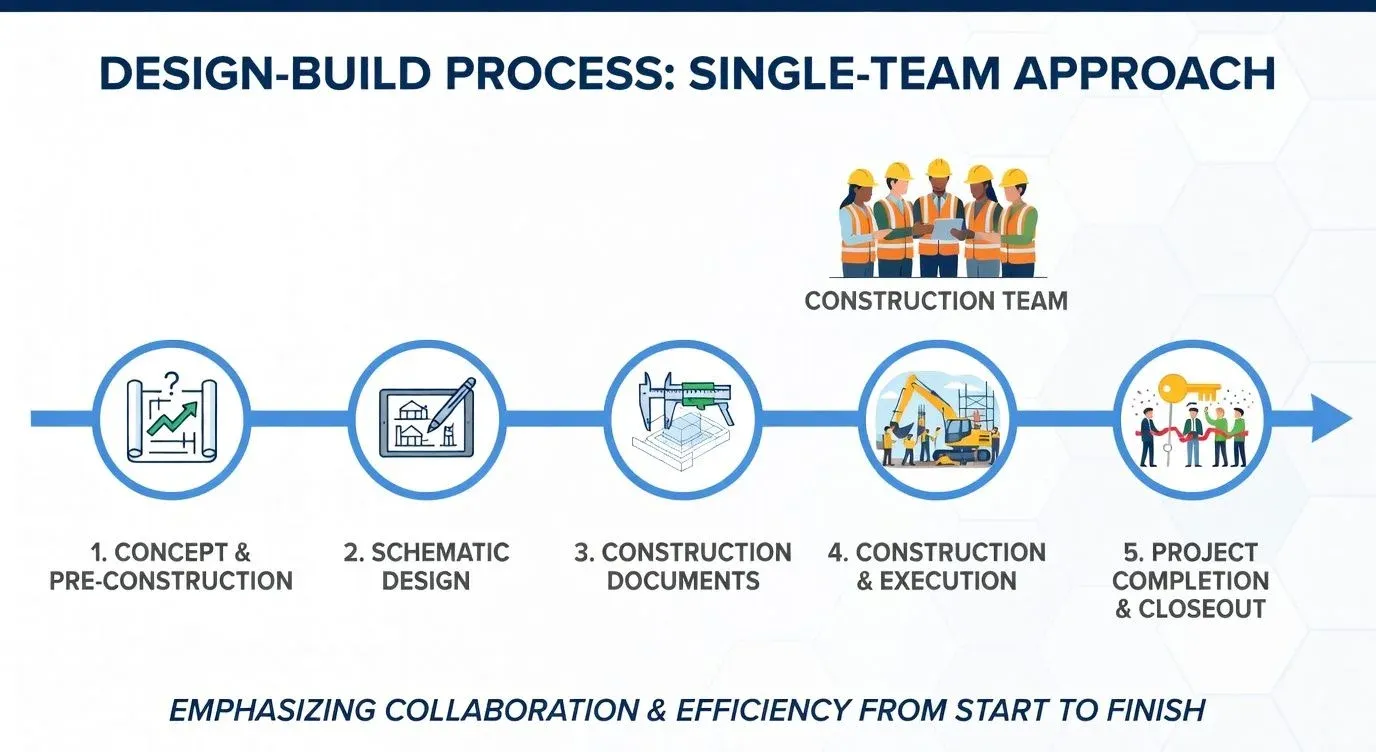
Here is how JobTread fits into each stage of a custom home with us.
Kickoff and Setup
We set up the project in JobTread with the plans, the budget by category and the schedule. You get client portal access, so the schedule, budget structure and contract documents are in one place from the first meeting.
Field Conditions and Change Orders
When a trade runs into something unexpected on site, they photograph it and log it in JobTread. We review it, confirm the scope change, price it and send you a change order through the portal to approve before the work goes ahead.
Visibility During Construction
Our superintendent logs daily activity with progress photos. Seeing the work as it happens lets you raise a concern while a fix is still simple, such as moving a shower niche during framing instead of after tile.
Selections and Budget Trade-offs
When you want to upgrade a selection, we open the budget together and look at every category. If one area is tracking under, or a detail elsewhere can be simplified, you can see whether the upgrade fits before you decide.
Trade Coordination and Closeout
Trades working in the same spaces share one schedule and one set of updates, so conflicts get sorted before they cost time. At closeout, the project record holds the as-built plans, change orders, selections and warranty documents, and you keep access to it.
The Design-Build + Technology Advantage
Design-build delivery produces better outcomes than traditional design-bid-build approaches because it eliminates the adversarial separation between design and construction. When design and construction are unified under single-source leadership, communication is more efficient, decisions are better informed, accountability is clear, and clients benefit from seamless coordination.
Technology amplifies these inherent design-build advantages. Integrated project management platforms like JobTread make coordination even more efficient by automating information flow, providing real-time visibility, eliminating manual synchronization, and creating permanent documentation. The design-build model provides structural integration; technology provides operational integration.
Transparency Builds Trust
The design-build approach naturally produces more transparency than separated design and construction because clients work with a single team that owns complete accountability. When design and construction are separated, each party can deflect responsibility by blaming the other. Architects blame contractors for poor execution; contractors blame architects for inadequate documentation. Clients are trapped in the middle trying to arbitrate disputes.
Design-build eliminates this finger-pointing, but transparency still requires intentional effort and appropriate tools. JobTread enables the level of transparency that our design-build philosophy demands: real-time visibility into schedules and budgets, complete access to project documentation, unified communication histories, and permanent records that extend beyond project completion.
This transparency builds trust, and trust is the foundation of successful client relationships. Clients who trust their builder make better decisions, experience less stress, provide more valuable input, and become enthusiastic advocates who refer future clients. Technology that enables transparency produces business value that extends far beyond operational efficiency.
Efficiency Reduces Costs
Every hour spent on redundant administration, every day lost to coordination delays, every error caused by outdated information, and every conflict resulting from miscommunication adds cost to construction projects. These inefficiencies are ultimately borne by clients through higher prices, longer schedules, or reduced quality.
JobTread eliminates many sources of inefficiency: automated status reporting reduces administrative time, real-time communication prevents coordination delays, unified document access prevents errors from outdated information, and structured workflows reduce miscommunication. These efficiencies translate directly into cost savings that we can pass along to clients through more competitive pricing, invest in higher quality execution, or capture as improved profitability that supports business sustainability.
The design-build model creates potential for efficiency; integrated technology delivers that efficiency in practice. Without appropriate tools, even unified design-build teams can struggle with coordination overhead. With appropriate tools, coordination becomes nearly frictionless, allowing teams to focus on delivery rather than mechanics.
Better Outcomes for Clients
Ultimately, the measure of success is client outcomes. Design-build delivery produces better outcomes because it aligns incentives, eliminates adversarial relationships, and provides single-source accountability. Technology amplifies these benefits by enabling transparency that builds trust, efficiency that reduces costs, and data-driven decision-making that improves quality.
Real-time visibility gives clients the information they need to make decisions and to see the reasoning behind our recommendations. Efficient coordination keeps the team aligned. That is what design-build looks like when it is supported by the right technology.
Conclusion: Technology as Enabler, Not Replacement
JobTread is a tool, not a replacement for expertise, judgment, or relationships. Technology cannot substitute for design vision, construction craftsmanship, or personal commitment to client service. What technology can do—what JobTread does for our firm—is eliminate friction, provide visibility, enable collaboration, and amplify the capabilities of skilled professionals.
We use JobTread not because we worship technology for its own sake, but because it makes us better at what we do. It allows us to deliver on our commitment to transparency more completely. It enables us to coordinate more efficiently, make better decisions, reduce errors, and provide clients with experiences that build trust and confidence. It transforms administrative burden into automated workflows, creating space for our team to focus on design excellence, construction quality, and client relationships.
The construction industry has historically been slow to adopt technology, often with good reason: many platforms over-promise and under-deliver, creating complexity without corresponding value. JobTread is different because it was built by people who understand residential construction, designed to solve actual problems that builders face every day, and refined through years of real-world use by firms like ours.
Our commitment to transparency, communication, and quality existed before we implemented JobTread. What JobTread provided was the operational capability to deliver on those commitments at a level that fragmented tools could never support. It took our design-build philosophy and gave it a technological backbone that makes integration real, makes transparency actionable, and makes collaboration seamless.
If you are considering a custom home, addition, or ADU in Idaho’s Treasure Valley or mountain communities, we invite you to see JobTread in action during your initial consultation. We will show you the client portal, demonstrate real-time budget visibility, walk through how daily logs provide continuous project updates, and explain how integrated technology supports the design-build advantages that produce better outcomes.
You deserve a construction experience built on clear communication and supported by good tools. JobTread is one of the ways we work toward that on each project.

About the Author
Brad Schmidt is the Owner of Abstract RD+B (Abstract Residential Design + Build), a design-build team for custom residential design and construction in Idaho’s Treasure Valley and mountain communities. Brad leads projects from initial concept through final completion, covering residential design, structural coordination, construction management and design-build integration for custom homes, additions and ADUs.
FAQ: JobTread and Our Design-Build Process
What does JobTread help homeowners see?
It helps organize budgets, selections, communication, documents, schedules, and decisions in one project system.
Does software replace direct communication?
No. It supports the process, but clear conversations, planning, and follow-through still matter most.
Planning a custom home in Boise or the Treasure Valley?
We help connect the site, budget, drawings, and construction plan before decisions get too far down the road. If you are starting a custom home, addition, or ADU, we would be glad to talk through the next step.