
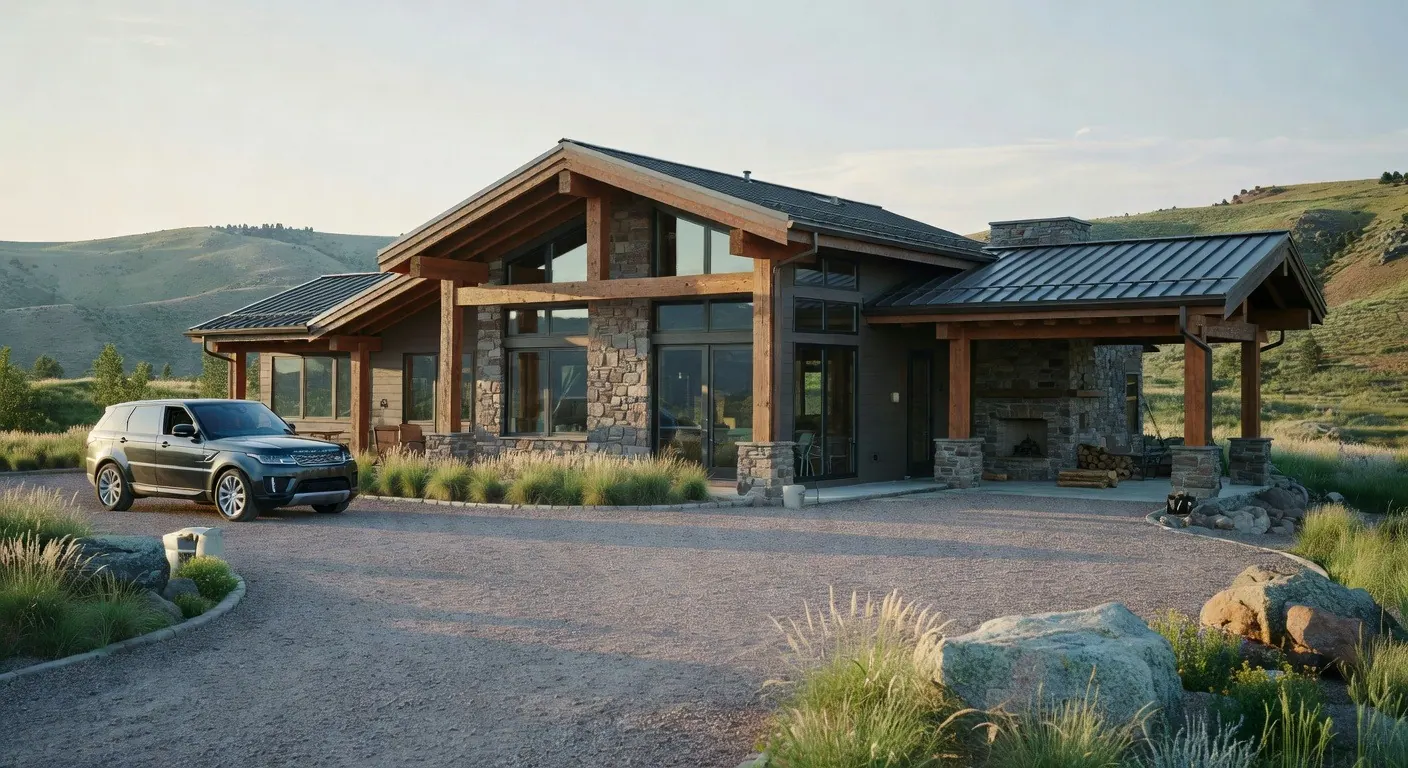
Short answer: a Boise custom home budget is shaped by more than square footage. The lot, site work, utilities, permitting, design complexity, finish level, outdoor living and contingency all matter. Each project is priced to its scope, and we separate the house from the full project so each piece gets planned.
You have probably been researching custom home costs for weeks, and the figures you find online rarely agree. Most of them also leave out what is actually included.
That confusion is not your fault. Many cost figures cover the house and leave out the finished lot, permits, utility connections and landscaping, which can move the total a long way. That leaves you comparing apples to oranges.
Strong custom home planning in the Treasure Valley separates construction from land, site work, permits, utilities, landscaping and allowances, so you can compare like with like. Here is what to discuss in 2026.
How Finish Level Shapes a Boise Custom Home
The cost of the house itself depends most on finish level, design complexity and your specific site conditions. Two homes with the same footprint can land in very different places.
It helps to think about finishes in three broad levels:
What’s included in “Entry-Level Custom”? Basic but quality finishes, spec-level cabinetry, slab countertops, standard rooflines, and builder-grade fixtures. Your home will be well-built and attractive, but without the high-end details.
What’s included in “Mid-Range Custom”? Upgraded cabinets, tile showers, luxury vinyl plank or hardwood floors, more complex rooflines and forms, covered patios, and upgraded appliances.
What’s included in “High-End Custom”? Custom cabinetry, engineered hardwood throughout, luxury appliances, exposed beams, expansive outdoor living spaces, smart home technology, and premium fixtures.
That is only the house. The items below sit outside it, and they often surprise people who planned around a square-foot figure alone.
Costs Outside the House to Plan For
A square-foot figure usually covers the structure. The items below are often left out of that figure, and together they can be a large part of the total. For the full list of what sits outside construction, read our Idaho custom home cost guide.
Land and Lot Costs
Lot cost varies widely by city, neighborhood, size and how ready the lot is to build on. A lot that looks like a bargain can need more site work than one that costs more up front. If you are pricing a home on a Boise lot, talk with a Boise custom home builder who looks at the site before the plan.
If you’re buying raw land outside of a subdivision, factor in additional costs for surveys, soil testing, and potentially extending utilities.
Site Preparation
Before your foundation is poured, your lot needs to be ready. Site preparation depends on:
- Grading and excavation
- Soil testing and compaction
- Tree removal and clearing
- Retaining walls (often needed on sloped lots)
Flat subdivision lots require minimal prep. Hillside lots or properties with difficult soil conditions can cost significantly more.
Permits and Regulatory Fees
Every jurisdiction in the Treasure Valley has its own fee structure. Permit costs in the Boise area may include:
- Building permit (based on project value)
- Plan review fees
- Impact fees
- Inspection fees
- Sewer and water connection fees
In some Idaho municipalities, you may also need irrigation district approval or highway access permits before construction begins.
Utility Connections
If your lot is in an established subdivision with utilities at the property line, connections are usually simpler. On a more remote lot, extending utility lines can become a major line item, depending on distance.
Rural properties without city services need a well and a septic system, which are planned as their own items.
Landscaping and Exterior Features
Landscaping is easy to underplan. Some build budgets include only a graded lot and basic seeding. A complete landscape package can include:
- Sod or seeding
- Irrigation system
- Driveway and walkways
- Fencing
- Patio or deck
- Trees and plantings
Interior Furnishings and Move-In Costs
These aren’t construction costs, but they’re real expenses that many families forget to budget for:
- Window treatments
- Appliances not included in build
- Moving costs
- Temporary housing during construction (varies widely)
Where Your Choices Matter Most
Interior finishes, such as cabinets, flooring, paint, fixtures and appliances, are where your choices have the biggest effect on cost. Major systems, framing, exterior finishes and the foundation follow. Moving from builder-grade cabinets to fully custom cabinetry is one of the larger single decisions in most homes.
Common Budgeting Mistakes to Avoid
Mistake #1: Using the builder’s allowances without verifying them. Many contracts include “allowances” for items like lighting, flooring, and appliances. These allowances often reflect builder-grade selections. If you want upgraded fixtures, verify whether the allowances are realistic for your taste or you’ll face overages during the selection process.
Mistake #2: Forgetting the contingency. Even with careful planning, unexpected costs come up. Set aside a contingency as part of the total budget, and talk through its size with your builder during design.
Mistake #3: Making changes after construction begins. Changes to the plan during construction cost time and money. The more decisions you settle before breaking ground, the smoother the build.
Mistake #4: Choosing a builder based on the lowest bid. A low bid often means aggressive allowances, minimal site prep assumptions, or a builder planning to make up margin through change orders. Focus on understanding what’s included and comparing like to like.
Mistake #5: Skipping the pre-construction work. A thorough pre-construction phase settles selections, gathers trade pricing and identifies site challenges while the plan can still change.
Building Your Custom Home Budget: Next Steps
If you’re serious about building a custom home in the Treasure Valley, here’s how to move forward with confidence:
- Determine your total budget, not just construction. Include land, site prep, permits, utility connections, landscaping and a contingency, then see what remains for the house itself.
- Get pre-qualified for a construction loan. Construction loans work differently than mortgages. Talk to lenders early to understand your borrowing capacity and loan structure.
- Research lots with realistic eyes. A beautiful hillside property can need far more site work than a flat lot. Factor site conditions into your land purchase decision.
- Interview builders about their pre-construction process. Ask specifically: What do I receive before signing a construction contract? How do you keep the budget updated as the design develops?
- Ask for a line-item budget. A single square-foot figure does not show you what is included. A line-item budget lets you see how each part of the project is planned.
Key Takeaways:
- Every custom home is priced to its scope. The lot, size, design complexity, finishes and site work matter more than any single square-foot figure.
- Site preparation, permits, utility connections and landscaping sit outside the house and should be planned from the start.
- The best protection is a thorough pre-construction process that settles selections, gathers trade pricing and identifies site challenges before construction begins.
Building a custom home in Boise should be exciting, not stressful. A smooth build often comes down to one thing: how thoroughly your builder plans before construction begins.
At Abstract RD+B, we build the budget alongside the design. Before you sign a construction contract, you receive detailed drawings, a selection schedule and a line-item budget with defined allowances and contingency, with clear budget updates whenever the plan changes.
Frequently Asked Questions
What does a custom home in Boise cost?
Each home is priced to its scope. Finish level, design complexity, size, the lot and site work all shape it, and land, permits and site preparation are planned on top of the house itself.
What costs sit outside the house?
Plan for land, site preparation, permits, utility connections, landscaping and a contingency. On some lots these items move the total more than the finishes do.
Do I need a contingency?
Yes. A contingency covers the unexpected. Its size depends on the site and the scope, so we set it with you during design.
How can I keep my budget on track?
Choose a builder with a thorough pre-construction process that includes detailed drawings, settled selections and a line-item budget before construction begins. Keep changes after construction starts to a minimum.
About the Author
Abstract Residential Design & Build (Abstract RD+B) designs and builds custom homes throughout Boise and the Treasure Valley. We build the budget alongside the design, with detailed drawings, a line-item budget and clear budget updates before construction begins.
Ready to start planning your custom home budget?
Start a consult and we will plan the budget alongside your design.
If you are comparing budgets for Boise specifically, our custom home builder in Boise page explains the site and neighborhood questions that can change cost before drawings are final.